Why am I still tired after 8 hours of sleep?
Eight hours is time in bed, not sleep. What decides how you feel at 7am is how much of it was deep and unbroken, and how to find out which of your nights were quietly good.
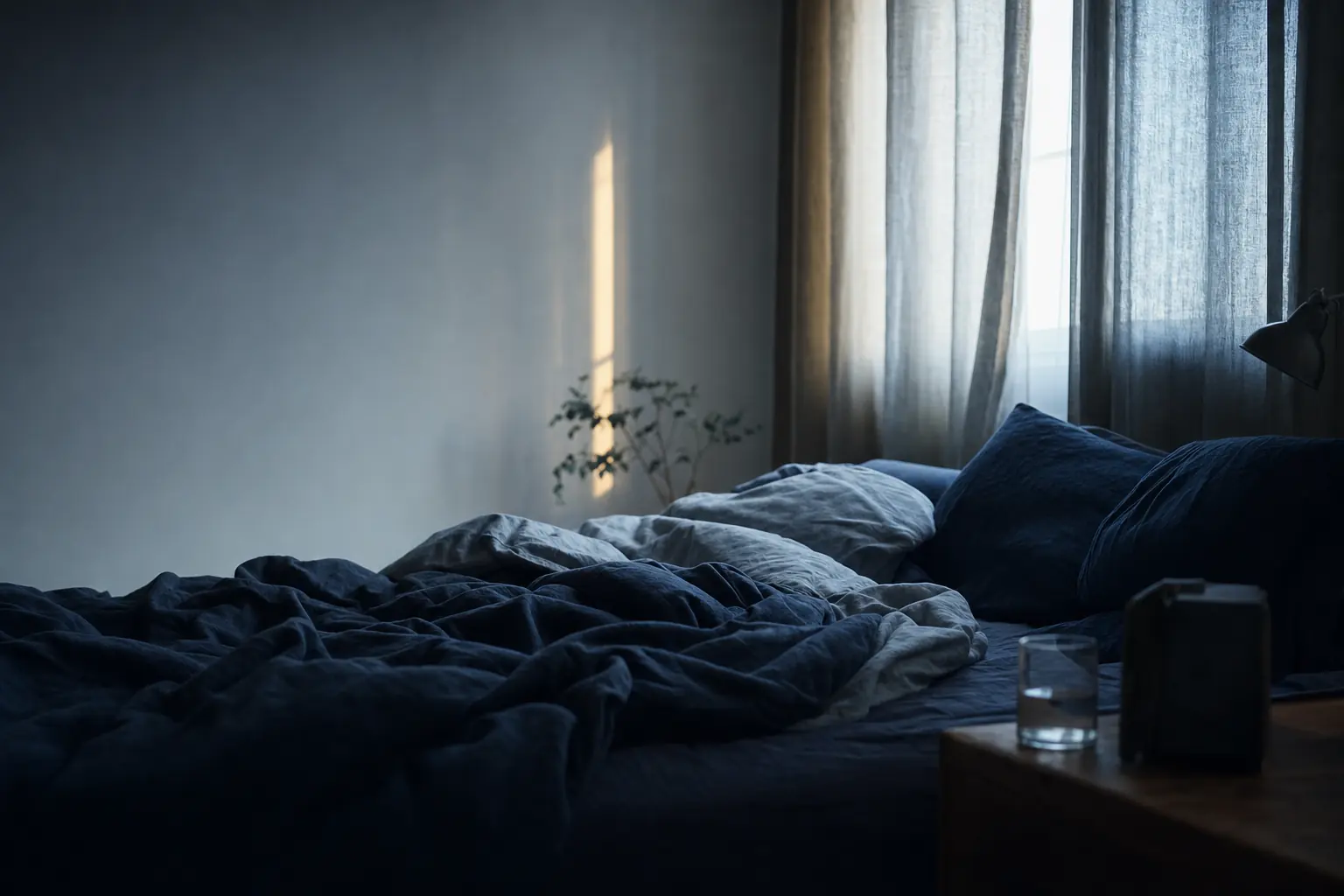
If you sleep eight hours and still wake up wrecked, the usual reason is that you measured the wrong thing. Eight hours is time in bed. What decides how you feel at 7am is how much of that time was deep and uninterrupted, and those two numbers can be very far apart on the same night.
I'm Fayhe, I make Chill. I spent about two years assuming I was just a person who woke up tired, because the number on my phone said 8:04 and 8:12 and 7:58 and I had no counter-argument. Then I started looking at the nights next to each other instead of one at a time, and the pattern was embarrassingly obvious. My bad mornings were not my short nights. They were my late nights, whatever the total.
Time asleep and quality of sleep are different numbers
A night can be eight hours long and still be shredded into pieces. Every time you surface (a noise outside, a warm room, a partner turning over) you drop out of deep sleep, and getting back down there takes time you don't get credited for. The tracker still says eight hours. Your body counts the fragments.
This is why "how many hours did you get" is such a weak question. Two people can report the same eight hours where one had four solid deep-sleep blocks and the other had eleven micro-wakeups. They will not feel the same, and no amount of going to bed earlier fixes the second one.
There is also the boring possibility that you feel awful for the first twenty minutes on purpose. Sleep inertia is the grogginess right after waking, it is completely normal, and it can last up to two hours if you got pulled out of a deep stage. If you feel fine by the time you've had coffee and walked somewhere, that was probably inertia, not a bad night.
The three things that were actually doing it, in my case
Waking up mid-cycle. An alarm that lands in the middle of deep sleep costs more than the twenty minutes it saved. Shifting my alarm by fifteen minutes, once, did more for my mornings than a month of going to bed early.
A room a couple of degrees too warm. Your core temperature has to drop for deep sleep to hold. A warm bedroom keeps pulling you back up toward the surface all night without ever properly waking you, so it never shows up as a wake-up you'd remember.
Alcohol. It knocks you out and then wrecks the second half of the night. Falling asleep fast is not the same as sleeping well, and two glasses of wine is the single most reliable way I know to sleep eight hours and feel like four.
Stop guessing, find your own pattern
Here's the annoying truth: none of the above is necessarily your reason. Sleep advice is written for populations, and you are one person with one bedroom and one schedule.
This is the whole point of Health Insights in Chill. It reads the sleep, activity and mood data your phone is already collecting, and instead of showing you another chart, it looks for correlations across a long window and tells you what actually tracks with what. Mine said my mood correlated with running, which I'd have guessed, and that my worst sleep followed my most sedentary days, which I would not have. Each insight shows how many samples it's built on and how confident it is, because a pattern from seven days is a coincidence and you should be told which one you're looking at.
Give it a couple of weeks of ordinary living before you read too much into it. The first insights are noise. The ones that survive a month are worth acting on.
What to change tonight
Pick one, not all of them. Changing five variables at once means you learn nothing:
- Move your alarm fifteen minutes either way and hold it for a week.
- Drop the bedroom two degrees.
- Put the last drink three hours earlier, or skip it.
- Get outside within an hour of waking, even for five minutes. Morning light is the strongest signal your body clock gets, and it works on tonight's sleep, not this morning's.
when to stop optimising and ask someone
If you snore loudly and wake up gasping, if you get morning headaches, if you're falling asleep during the day, or if this has gone on for months regardless of what you change, that is not a routine problem. Sleep apnoea is common, very treatable, and completely invisible from inside your own night. No app is going to fix that one, and a sleep clinic will sort it out faster than another year of experimenting.
For everyone else: the fix usually isn't more hours. It's finding which of your nights were quietly good and doing more of whatever that day looked like.
If your problem is getting to sleep in the first place rather than how you feel after, racing thoughts at night is the one to read next.